How to Choose Lace for Saree Borders — Golden, Pearl, Mirror Work & More
How to Choose Lace for Saree Borders — Golden, Pearl, Mirror Work & More
The right lace border can transform a plain saree into a statement piece. Ask any boutique owner or fashion designer: the border is often what sells the saree. But with dozens of lace types available — golden jari, pearl-studded crochet, mirror work, cotton, polyester, Jacquard — choosing the right one for your fabric, occasion, and budget requires knowing what works.
As a Surat-based lace manufacturer since 1990, here's the selection framework we share with our wholesale buyers across India.
Match Lace to Fabric
The first rule of lace selection: the lace border should complement the saree fabric, not fight it.
| Saree Fabric | Best Lace Border Type | Why | |---|---|---| | Silk (Kanjeevaram, Banarasi) | Golden jari, Jacquard zari | Heavy silk needs substantial borders that match the fabric's weight and sheen | | Cotton (handloom, Mangalagiri) | Cotton lace, crochet lace | Lightweight natural lace complements cotton's texture without overpowering it | | Georgette / Chiffon | Narrow jari, sequence lace, pearl lace | Light, flowing fabrics need delicate borders — 1-2 inches wide max | | Organza | Silver or pearl lace | Organza's transparency suits light-reflecting lace that doesn't block the fabric's sheer quality | | Crepe / Satin | Jacquard floral, embroidered lace | Medium-weight fabrics can carry medium to heavy borders with visible pattern detail |
Lace Types Explained
Golden Jari Lace: The classic Indian saree border. Made with metallic yarn (jari) woven into polyester or nylon base thread. Available in gold, silver, copper, and rose gold. Widths range from 1 inch (blouse trim) to 6 inches (pallu border). Golden jari on silk is the most popular combination in Indian bridal and festive wear, and "golden lace border" ranks among the highest-searched lace terms in India, according to Google Trends data.
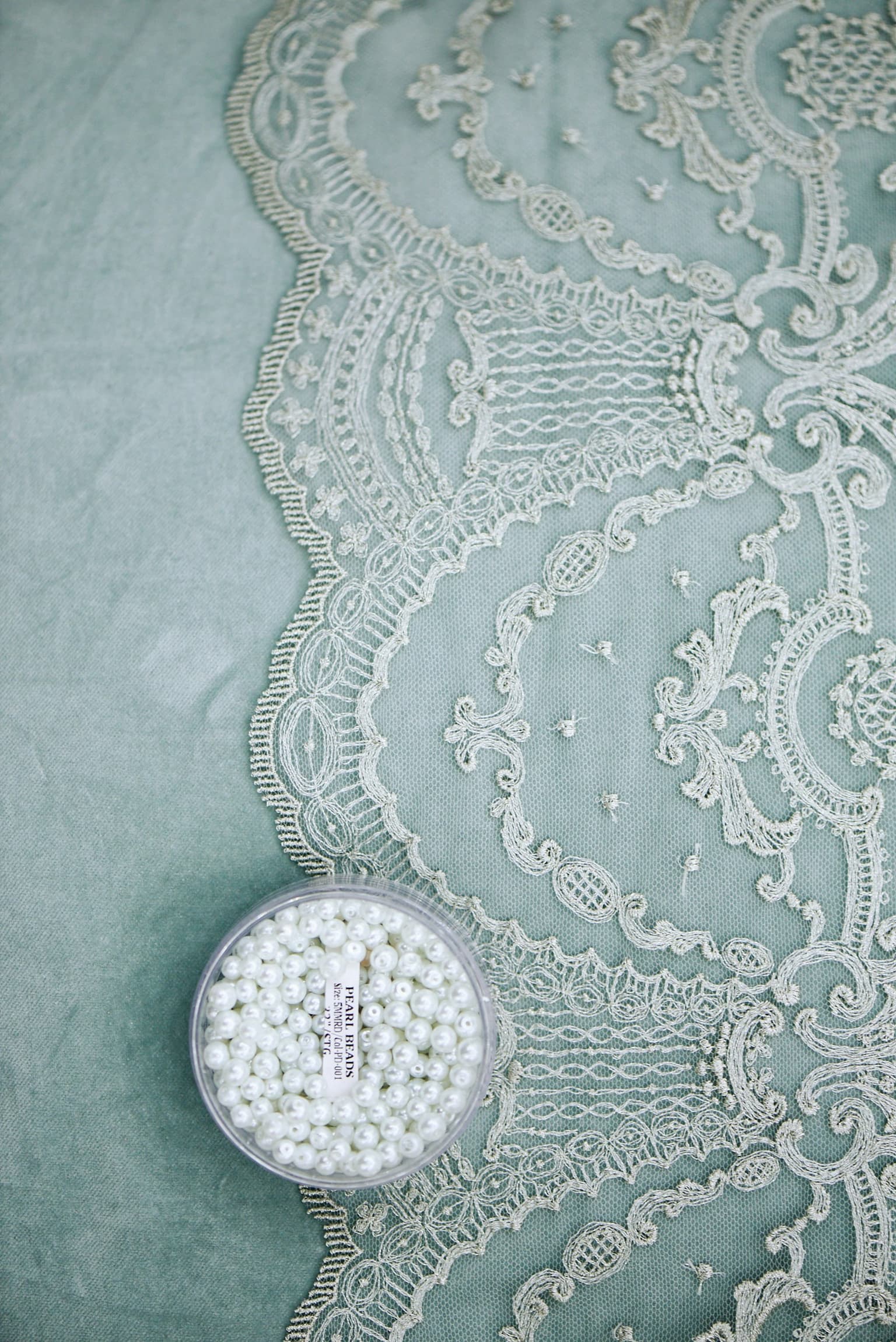
Pearl Lace: Crochet or jari lace with embedded imitation pearls. The texture contrast — open crochet weave against the smooth surface of pearls — creates a three-dimensional border that photographs beautifully. Popular for bridal blouses, reception sarees, and lehenga dupattas. Pearl lace in ivory or champagne tones works exceptionally well on pastel sarees.
Mirror Work Lace: Lace with small embedded mirror pieces (shisha work), typically set into crochet or jari base. Originates from Gujarat's embroidery tradition. Mirror work lace borders are popular for festive and Navratri sarees, where the mirrors catch light during evening events.
Cotton Lace: Lace made from 100% cotton yarn, often in crochet or tape lace styles. Breathable, matte-finish, and ideal for everyday cotton sarees. White and off-white are the most-ordered colours, followed by contrast-colour cotton lace on block-printed sarees.
Polyester Lace: Machine-made lace from polyester yarn. The most affordable lace type (₹8-20 per metre wholesale). Available in a wide colour range and used extensively on budget and mid-range sarees. Durable, colourfast, and does not tarnish — unlike jari, which can oxidise over time.
Jacquard Floral Lace: Woven lace with raised floral or paisley patterns created by the Jacquard mechanism on power looms. More structured than crochet, with clearly defined motifs. Popular in muted metallic tones — antique gold, champagne, brushed silver — for contemporary saree designs.
Choosing by Occasion
Wedding / Bridal: Go heavy — multi-layer jari borders with pearl or stone embellishment. Gold on red, maroon, or green silk remains the most-ordered bridal combination. Extra-wide borders (4-6 inches) for the pallu make a statement without requiring additional embroidery on the saree itself.
Festive (Diwali, Navratri, Pongal): Mirror work borders or single-layer golden jari in 2-3 inch width. Bright colours — rani pink, turmeric yellow, emerald green — with contrast borders.
Reception / Evening: Pearl lace or Jacquard floral borders in muted metallic tones — champagne, rose gold, antique silver. The trend in 2026 is toward understated elegance rather than loud shine.
Daily Wear / Office: Cotton lace or narrow polyester lace in 1-1.5 inch width. Solid colours matching or tonally contrasting with the saree. No metallic elements — keeps the look professional and machine-washable.
Wholesale Buying Tips
If you source lace by the roll for saree production or boutique retail:
- Order by width, not just design: A 2-inch lace border and a 4-inch version of the same pattern are different products with different uses. Specify width clearly.
- Check colour under natural light: Metallic lace appears different under tube lights vs sunlight. Always check a physical sample before placing a bulk order.
- Buy extra for wastage: Saree borders require continuous runs of 5.5-6 metres per saree. Order 5-10% extra to account for join points and pattern matching.
At Paras Lace, we stock over 200 border designs across jari, crochet, cotton, and Jacquard categories — and we manufacture custom designs to buyer specifications.
Sourcing lace borders for your saree collection? Call Paras Lace at +91 87502 69626 for wholesale pricing. Based in Surat, Gujarat — manufacturing quality lace since 1990.
Related Reading
About the author
Paras Jain writes from the ParasLace workshop floor in Surat's Textile Market. The family-run mill has manufactured jari, crochet, and decorative lace since 1990, supplying garment houses across India and six export markets. More about ParasLace →