Crochet Lace Buying Guide — Patterns, Wholesale Prices & Gujarat Manufacturers
Crochet Lace Buying Guide — Patterns, Wholesale Prices & Gujarat Manufacturers
Crochet lace is having a moment. Google Trends data shows a 40% year-over-year increase in searches for crochet lace patterns in India — driven by demand from boutique designers, garment manufacturers, and international buyers sourcing from Indian textile hubs. And for good reason: crochet lace offers a handmade texture and versatility that machine-made lace cannot replicate.
As a Surat-based lace manufacturer with decades of crochet production experience, here's everything wholesale buyers need to know about crochet lace in 2026.
What Makes Crochet Lace Different
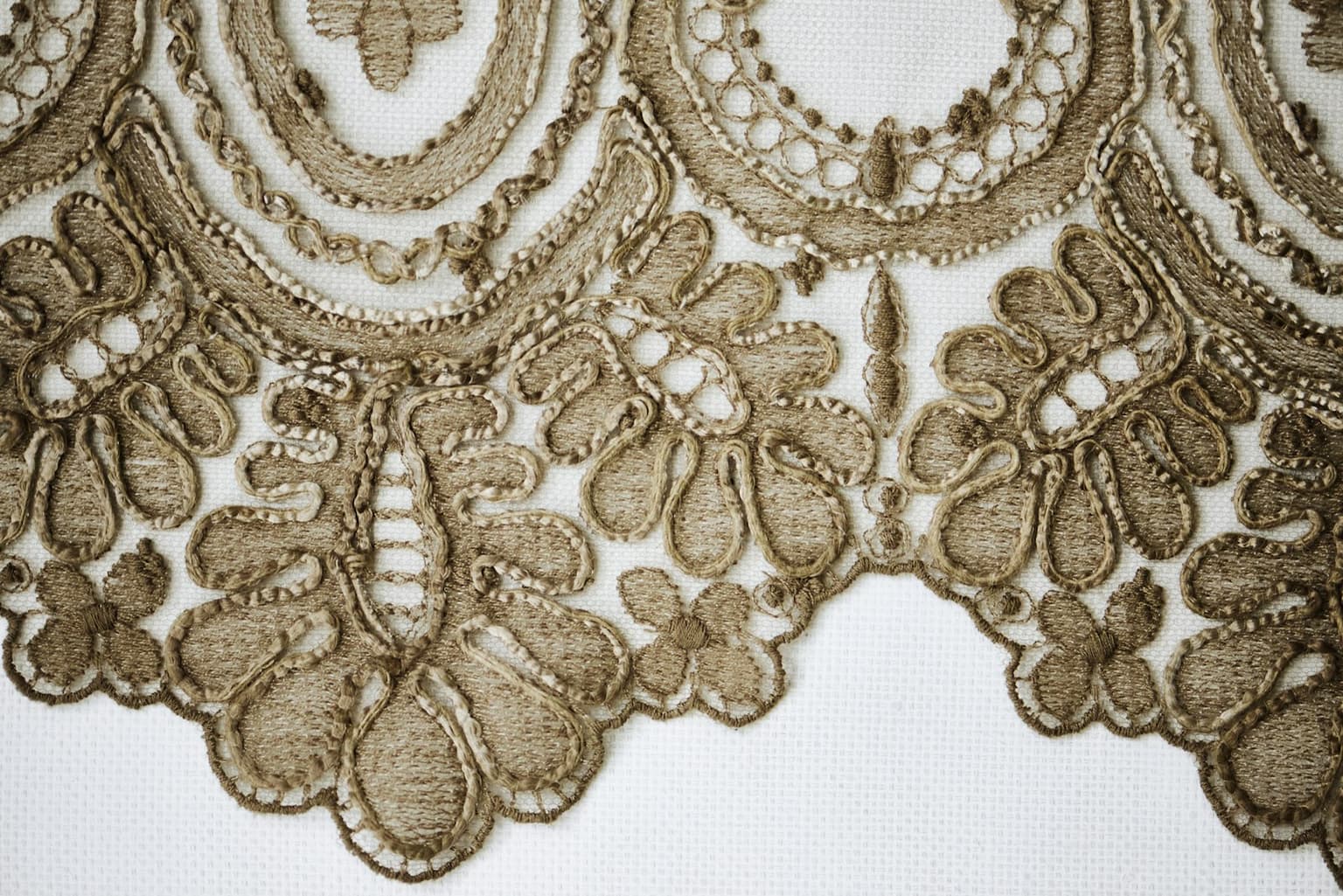
Crochet lace is produced by interlocking loops of yarn using a crochet hook — either by hand or on crochet knitting machines. Unlike jacquard-woven or Raschel machine lace, crochet lace has an open, airy structure with clearly visible loop patterns. This gives it a distinct visual texture that photographs well and adds dimension to garments.
Key characteristics:
- Open weave structure — breathable, lightweight, ideal for summer garments
- Visible hand-crafted appearance — each stitch pattern creates a recognisable texture
- Excellent draping quality — conforms to garment contours without stiffness
- Available in cotton, polyester, and blended yarns — each with different price points and applications
Trending Crochet Lace Patterns in 2026
1. Floral Motif Crochet: Continuous floral patterns — roses, daisies, lotus motifs — crocheted edge-to-edge. The most popular crochet category for saree borders and lehenga trims. Multi-colour floral crochet (3-4 colours in one border) is a premium category with strong demand from export buyers.
2. Scalloped Edge Crochet: Crochet with repeating shell or scallop shapes along one edge. The #1 choice for saree and dupatta borders where the scalloped edge creates a finished hem without additional stitching. Available in widths from 1 to 4 inches.
3. Pearl-Studded Crochet: Standard crochet patterns with imitation pearls woven into the design at regular intervals. The combination of textured crochet with smooth pearls creates a bridal-quality finish. This is Paras Lace's most-requested premium crochet category in 2026.
4. Geometric Crochet: Diamond, chevron, or honeycomb patterns — a modern take on traditional crochet. Popular with contemporary fashion brands and for Western-wear applications like crochet tops and dresses.
5. Tape Crochet Lace: Narrow (1-2 cm) crochet strips used as insertion lace between fabric panels or as delicate neckline trim. A staple product for kurti and blouse manufacturers.
Crochet Lace Wholesale Price Ranges (Surat, June 2026)
| Crochet Lace Type | Width | Wholesale Price (per metre) | Typical MOQ | |---|---|---|---| | Basic cotton crochet (single colour) | 1-2 inches | ₹12-25 | 100 metres | | Basic polyester crochet (single colour) | 1-2 inches | ₹8-18 | 100 metres | | Floral motif crochet (multi-colour) | 2-4 inches | ₹30-65 | 50 metres | | Pearl-studded crochet | 1.5-3 inches | ₹50-120 | 50 metres | | Scalloped edge crochet border | 2-4 inches | ₹20-50 | 100 metres | | Geometric pattern crochet | 2-3 inches | ₹18-40 | 100 metres | | Tape crochet lace (narrow) | 1-2 cm | ₹5-15 | 200 metres |
Prices vary based on yarn quality, pattern complexity, colour count, and order volume. Custom designs and colour-matched orders typically carry a 15-25% premium over catalogue designs.
Cotton Yarn Count and Quality
Crochet lace quality starts with the yarn. Two key specifications matter:
- Yarn count (Ne): Higher counts (60s, 80s) produce finer, softer crochet lace suitable for premium garments. Lower counts (20s, 40s) produce coarser, more durable lace for mass-market applications. 40s and 60s cotton are the most commonly used counts in Surat crochet lace production.
- Mercerisation: Mercerised cotton yarn produces crochet lace with a subtle sheen and better dye absorption. Non-mercerised cotton has a matte finish and slightly rougher hand-feel — but costs 10-15% less.
For export buyers, always specify mercerised cotton to meet international quality expectations.
Sourcing Crochet Lace from Gujarat
Gujarat — and Surat specifically — is India's crochet lace manufacturing centre. The ecosystem advantages include:
- Skilled crochet artisans: Generations of crochet workers in Surat and surrounding areas produce consistent, high-quality hand-crocheted lace
- Yarn availability: Surat's textile markets stock cotton, polyester, and blended yarns in counts from 20s to 100s
- Dyeing infrastructure: Integrated dyeing units mean colour-matched crochet lace can be produced in 5-7 days
- Logistics connectivity: Surat's location on the Delhi-Mumbai industrial corridor means overnight shipping to India's major garment manufacturing centres
When evaluating Gujarat-based crochet lace manufacturers, ask for:
- Sample swatches of their top 5 selling patterns
- Yarn count specifications for each sample
- Minimum order quantities and lead times
- Colour-fastness testing (especially for dark and bright colours)
At Paras Lace, we manufacture crochet lace in cotton, polyester, and blends — from basic tape lace to premium pearl-studded borders — at our Surat facility. We supply wholesale buyers across India and export to markets in the Middle East and Southeast Asia.
Looking for quality crochet lace at wholesale prices? Call Paras Lace at +91 87502 69626. Manufacturing crochet lace, jari lace, cotton lace, and designer borders in Surat, Gujarat since 1990.
Related Reading
About the author
Paras Jain writes from the ParasLace workshop floor in Surat's Textile Market. The family-run mill has manufactured jari, crochet, and decorative lace since 1990, supplying garment houses across India and six export markets. More about ParasLace →