Designer Lace Borders for Dupattas 2026 — Trending Patterns, Widths, and Styling Tips
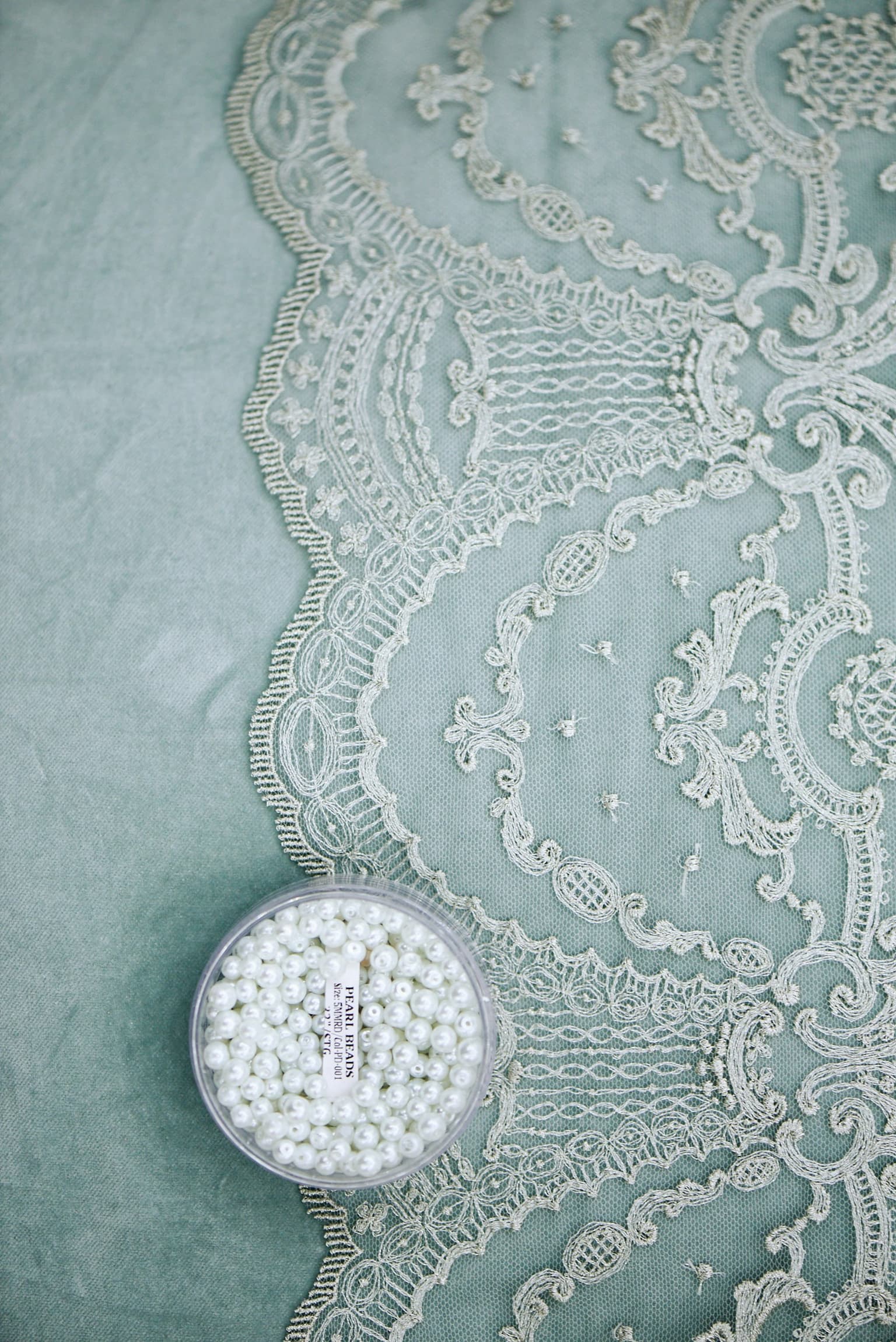
Designer Lace Borders for Dupattas 2026 — Trending Patterns, Widths, and Styling Tips
The dupatta is the unsung hero of Indian ethnic wear. A well-chosen lace border transforms a plain dupatta into a statement piece — and in 2026, designers and boutique owners across India are investing more in dupatta trims than ever before.
Why Dupatta Lace Is Having a Moment
Three trends are driving demand for dupatta-specific lace borders in 2026:
-
The sheer fabric trend. Organza, chiffon, and net dupattas are everywhere this season, and these lightweight fabrics need lace borders to give them structure and finish.
-
Minimalist bridal styling. Brides are opting for simpler lehengas paired with elaborately bordered dupattas — the dupatta does the heavy lifting, not the outfit underneath.
-
The matching-set economy. Boutique owners are creating lehenga-dupatta sets where the dupatta border matches the lehenga hemline lace — and that means buying coordinated lace in two different widths from the same manufacturer.
What Width Works for Dupattas
Dupatta lace widths differ from saree and lehenga borders. Here's the guide:
| Dupatta Fabric | Recommended Lace Width | Best Lace Type |
|---|---|---|
| Organza / Net | 2-4 inches | Jari lace, floral crochet |
| Chiffon / Georgette | 1.5-3 inches | Polyester lace, scalloped edge |
| Banarasi / Silk | 1-2 inches | Narrow jari lace, metallic border |
| Cotton / Linen | 0.75-2 inches | Cotton crochet lace, geometric pattern |
| Velvet | 3-5 inches | Designer lace border, heavy jari |
When creating matching lehenga-dupatta sets, order the lehenga border at 3-5 inches and the dupatta border at 2-3 inches from the same design family. The proportional difference creates visual hierarchy — the lehenga grounds the outfit while the dupatta frames the silhouette.
Trending Patterns for 2026
Based on wholesale orders flowing through Surat in May-June 2026, these are the patterns boutique owners and designers are buying:
- Scalloped floral borders — soft, feminine, and the single most-ordered dupatta lace style this season. Works on organza and chiffon.
- Geometric jali patterns — modern, architectural cutout designs in metallic gold and silver. Popular for destination wedding dupattas.
- Paisley-trail crochet — traditional Indian motif rendered in fine cotton crochet. Classic, never goes out of style.
- Two-tone borders — lace with a dual-colour weave (gold+ivory, silver+champagne) that catches light differently depending on the angle.
- Mirror-work lace — small embedded mirror accents (shisha-style) in jari lace borders. Growing trend for festive dupattas.
How Much Lace Do You Need Per Dupatta?
A standard Indian dupatta measures approximately 2.5 metres in length. Most dupattas are bordered on two long sides and both short ends. That means:
- Two long edges: 2 × 2.5m = 5 metres
- Two short edges: 2 × 1m = 2 metres
- Total per dupatta: ~7 metres of lace border
For a boutique producing 50 dupattas per collection, that's 350 metres of lace. At wholesale rates of ₹25-50/metre for designer lace from Surat, the per-dupatta lace cost ranges from ₹175 to ₹350 — a small investment for dramatic visual impact.
Sourcing from Surat
Surat's lace manufacturers produce the full spectrum of dupatta-width lace — from 0.75-inch narrow trims to 5-inch designer borders — across cotton crochet, polyester, and jari lace varieties. Most accept custom colour matching and pattern modifications for bulk orders.
Custom-dyed dupatta lace is quoted per project and adds 2-3 days to delivery timelines. Standard colours (ivory, white, gold, silver, black) are available from stock.
For wholesale lace borders for dupattas, lehengas, and sarees — all widths and patterns, custom colours available — contact Paras Lace at +91 87502 69626 or [email protected]. Manufacturing in Surat, Gujarat since 1990.
Related Reading
About the author
Paras Jain writes from the ParasLace workshop floor in Surat's Textile Market. The family-run mill has manufactured jari, crochet, and decorative lace since 1990, supplying garment houses across India and six export markets. More about ParasLace →