How to Identify Genuine Jari Lace vs Imitation — A Wholesale Buyer's Guide from Surat
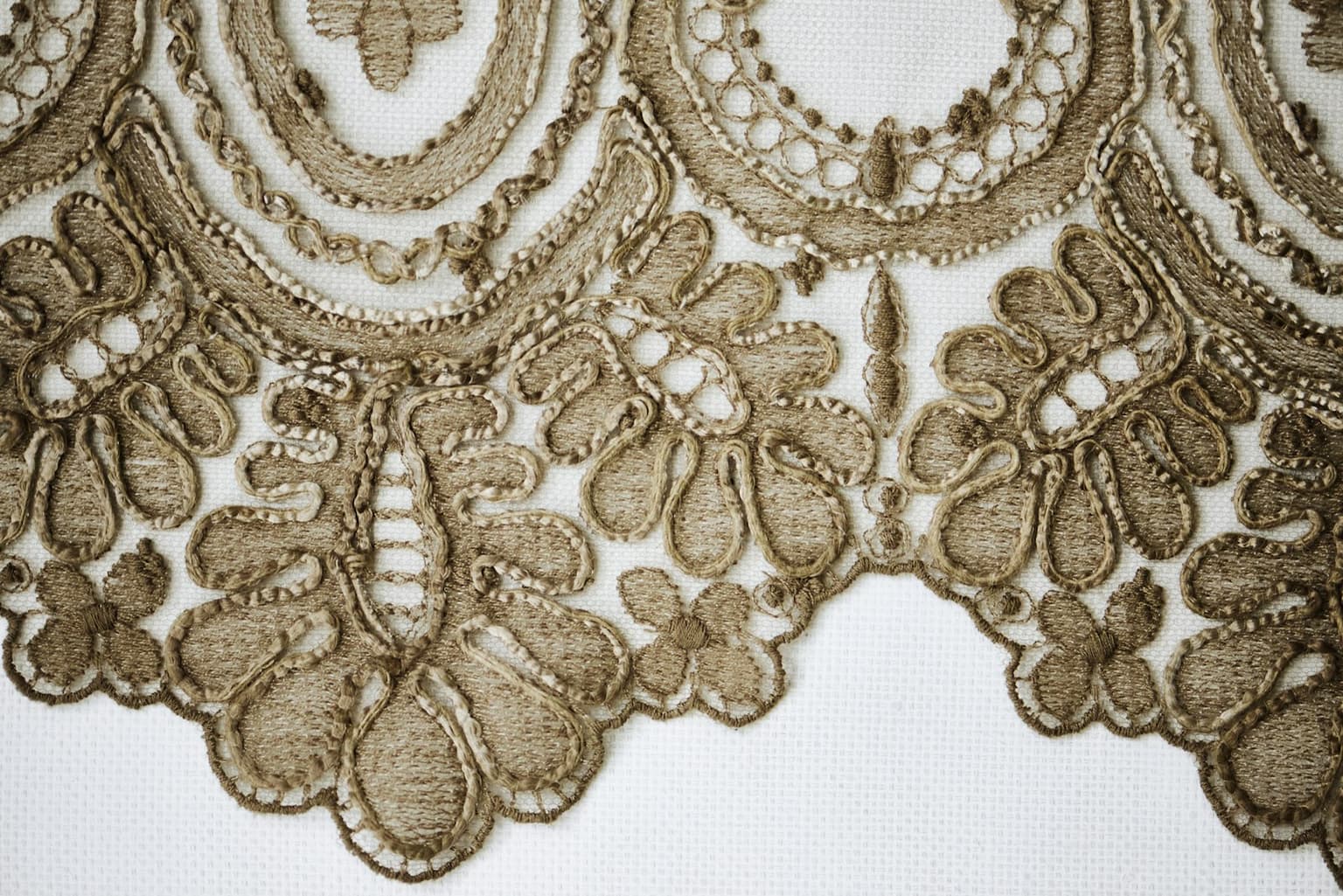
How to Identify Genuine Jari Lace vs Imitation — A Wholesale Buyer's Guide from Surat
Walk through any lace market in India and you'll hear the word "jari" thrown around liberally. But as any experienced buyer knows, there's a wide gap between genuine metallic zari lace and the imitation varieties that flood the budget segment. For boutiques, designers, and retailers who stake their reputation on quality, knowing the difference isn't optional — it's essential. The good news is that you do not need a laboratory to tell them apart. Six tests, most of which take under a minute with nothing more than a lighter, a fingernail, and a steady hand, will identify the overwhelming majority of imitation jari before it ever reaches your shelves.
At ParasLace, we have manufactured jari lace at Textile Market, Ring Road, Surat since Paras Jain founded the company in 1990, and we run several of these same tests on our own production. This guide explains each test step by step, what result to expect from each grade, and how price fits into the picture at factory-direct rates.
What Is Genuine Jari Lace?
Traditional jari (or zari) lace is made by wrapping a core yarn — typically silk or cotton — with a thin strip of actual metallic wire. Historically, this was pure silver or gold. Modern genuine jari uses copper wire electroplated with silver or gold, then flattened into a fine ribbon and wound spirally around the core thread. The result is a lace with real weight in the hand, a deep metallic sheen that shifts as the angle of light changes, and durability that survives years of wear and dry cleaning.
Imitation jari, by contrast, uses polyester or nylon thread coated with a metallic-looking chemical finish, or laminated with a coloured polyester film that is slit into narrow strips. It is lighter, cheaper to produce, and visually similar at first glance — but it does not wear, drape, or age the same way. To be clear: imitation metallic-effect trims are a legitimate product at the budget end of the market, and many garments are correctly built around them. The problem is not imitation jari existing; the problem is imitation jari being sold as genuine.
Six Tests to Tell Them Apart
1. The Burn Test
This is the most definitive test you can run without equipment, and it is why reputable manufacturers hand out cuttings freely. Snip a two-centimetre piece of the metallic thread from a sample swatch — never from a roll you intend to sell. Hold it with tweezers over a plate and touch a flame to one end, then read three signals. First, the residue: genuine jari leaves behind a fine, wire-like skeleton of ash where the metal ribbon was, while imitation melts into a hard, dark plastic bead you can feel between your fingers once cool. Second, the smell: a genuine cotton or silk core burns with the odour of burning paper or hair, while polyester gives off a distinctly chemical, sweetish plastic smell. Third, the behaviour: genuine jari chars and stops; imitation shrivels away from the flame, drips, and keeps melting. Run the test twice if the first result is ambiguous.
2. The Weight Test
Metal is dense and polyester film is not, so genuine jari lace is noticeably heavier than imitation of the same width and pattern. The practical method: hold a metre of the sample draped over your open palm and let it hang. Genuine jari falls with a definite, fluid weight — designers call it "drape with authority" — while imitation feels papery and floats. If you carry a small pocket scale, weigh a measured metre; build a reference by weighing a known-genuine sample of similar width first, because absolute numbers vary with width and pattern density. A sample that looks heavily metallic but weighs like plain trim is announcing what it is.
3. The Scratch Test
Gently scratch the surface of the metallic thread with your fingernail, using moderate pressure along a half-centimetre stretch, then inspect the spot in good light. On genuine jari, the electroplated layer is metallurgically bonded to the copper ribbon beneath; scratching may dull the polish very slightly but nothing flakes, and the colour underneath stays metallic. On imitation, the chemical coating or laminated film often peels at the scratch, lifts at the edges, or reveals a dull grey or white plastic layer underneath. Repeat the test at two or three points along the sample, because imitation coatings fail unevenly — and an inconsistent surface is itself a verdict.
4. The Tarnish Test
This one requires patience but costs nothing. Genuine silver-electroplated jari tarnishes — slowly developing a subtle antique patina that many designers actually prefer for bridal and heritage pieces. Imitation jari never tarnishes; instead its coating fades unevenly or rubs off entirely after repeated handling and washing. To use this as a buying test, leave a sample swatch exposed to open air for three to four weeks (faster in humid months) and compare it against a sealed twin. A gentle, even mellowing of tone indicates real electroplated metal; no change at all, or patchy dulling where the sample was touched, indicates a coated synthetic. This is a strong argument for ordering free swatches well before you need to commit to a bulk order.
5. The Unravel Test
Take a loose thread end from the swatch and carefully unwind the metallic wrap from its core, using a pin to lift the first turn. Genuine jari unwinds as a continuous flat metal ribbon — narrow, slightly springy, and clearly distinct from the soft cotton or silk core it was wound around. Hold the ribbon up: it keeps its shape and glints on both faces. Imitation thread unwinds (when it unwinds at all) as a limp strip of plastic film, often metallic on one face and dull on the reverse, or it turns out not to be a wrap at all but a single extruded synthetic filament with surface coating. Thirty seconds with a pin tells you what the marketing label would not.
6. The Price Check
Price is your simplest first-pass filter, provided you anchor it to factory-direct reality rather than retail folklore. At wholesale, factory-direct rates in Surat, lace runs from ₹2 to ₹50 per meter across the whole category: simple polyester trims from ₹2 per meter, mid-range cotton and crochet roughly ₹8–25, and premium jari and designer borders at the top of the band, up to ₹50 per meter. Genuine jari sits firmly in that upper band, because real electroplated copper ribbon, skilled winding, and quality control cost money. So when a supplier offers "genuine jari" at ₹3–5 per meter — pricing that belongs to basic synthetic trim — the description and the price are contradicting each other, and the price is telling the truth. Use the price check to decide which samples deserve the burn test, not as a verdict on its own.
Why It Matters
For boutiques and designers, using imitation jari on a premium garment is a reputation risk. A customer who buys a ₹5,000+ jari-work kurti or saree expects the metallic detailing to survive dry cleaning and seasonal wear. Imitation jari that peels after two washes generates returns and negative reviews — exactly what small businesses can't afford. The damage is asymmetric: the few rupees per meter saved on the trim is trivial against the lifetime value of a customer who decides your label cuts corners.
For export buyers, the stakes are higher still. International markets in the Middle East, Europe, and the US have strict expectations around product description accuracy. Selling "zari lace" that turns out to be polyester-coated trim can trigger disputes, chargebacks, and lost buyer trust. Documentation matters here too: a proper GST invoice that states exactly what was supplied, at what rate, gives you a verifiable paper trail from manufacturer to finished garment — one more reason to buy from suppliers who invoice everything formally, as ParasLace does on every order.
How Surat Manufacturers Maintain Quality
Reputable Surat-based lace manufacturers — including ParasLace — source jari thread from established wire-drawing units in Surat and nearby centres. The manufacturing process includes copper wire electroplating under controlled conditions for consistent coating thickness, precision winding around high-grade core threads, and multi-point checks for colour consistency, tarnish resistance, and tensile strength.
At ParasLace, every batch of jari lace undergoes a burn-test sample, weight verification, and visual inspection under daylight before it leaves the facility. Because our catalogue spans 2,400+ designs across jari, cotton, crochet, and polyester laces, we label each grade honestly — premium jari is sold as premium jari, and metallic-effect polyester trim is sold as exactly that, at a price that matches what it is. Both have their place; mislabelling has none.
How to Buy Genuine Jari Lace Wholesale
- Start with free swatches: Order physical swatches at paraslace.in/swatches and run the burn, scratch, and unravel tests yourself before placing a bulk order. Any reputable manufacturer will encourage this.
- Test in your own light: Examine swatches in daylight, shop lighting, and against the actual fabric of your garment line — metallic sheen reads differently in each.
- Verify the quote against the band: Genuine jari belongs in the upper portion of the ₹2–50 per meter factory-direct range. A "genuine" quote priced like budget trim fails the test before the sample arrives.
- Use the value-based minimum to test small: A first order at ParasLace needs only ₹5,000–7,000 of total goods, mixed across designs — so you can include a modest length of premium jari alongside other laces, validate it in production, and scale up on the reorder. In-stock catalogue designs dispatch from Surat within 3 days, so the validation loop is fast.
- Visit the facility if possible: Seeing the raw materials — spools of electroplated copper ribbon and core threads — tells you more than any certificate.
Want to test genuine jari for yourself? Call ParasLace at +91 87502 69626 or email [email protected] for free swatches, factory-direct pricing (₹2–50 per meter across 2,400+ designs), and bulk orders from just ₹5,000–7,000 of mixed goods — GST invoice on every order, dispatched from Textile Market, Ring Road, Surat 395002 within 3 days for in-stock designs. Order swatches at paraslace.in/swatches.
Related Reading
About the author
Paras Jain writes from the ParasLace workshop floor in Surat's Textile Market. The family-run mill has manufactured jari, crochet, and decorative lace since 1990, supplying garment houses across India and six export markets. More about ParasLace →